
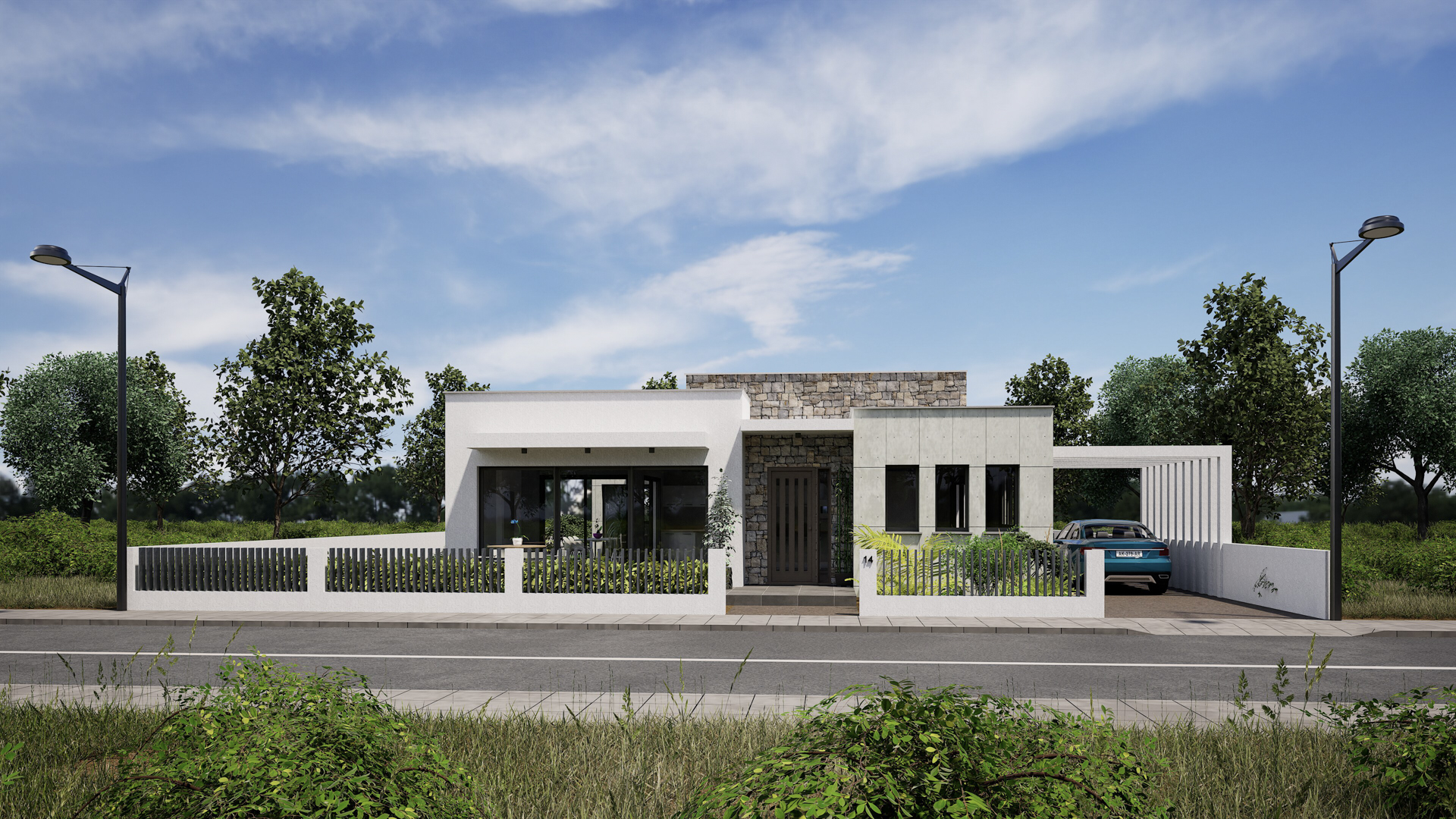
Architectural Planning
The architectural process begins once the site, intended use, and budget are defined. These three elements — environment, function, and cost — form the framework of any project. Planning is the act of harmonizing them.
Every design must address the fixed needs of the human body within a changing natural world. The purpose of a building is informed by its users and shaped by the culture it serves. The cost — of land, labor, and materials — guides how ambitions are translated into form.
To plan is to balance. It is a technical process, but also a cultural one. In shaping spaces, we shape experiences. Through planning, we don’t just design where things happen — we influence how they happen.
Our team has extensive experience across a wide range of building typologies including residential, retail, offices, restaurants, hotels, and industrial projects. We take on both new buildings as well as renovations and extensions.
The studio provides the full range of architectural services, covering the entire procurement route — from feasibility study to completion — working together with a range of consultants and coordinating a professional team that integrates all disciplines involved in procurement and construction.
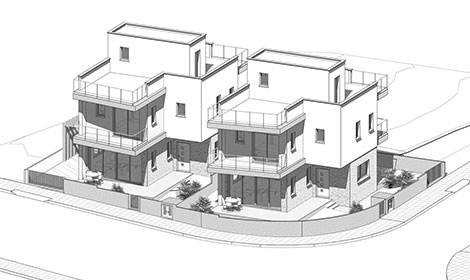
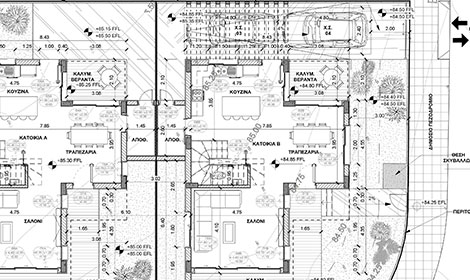
Planning the Environment
The natural world is both a challenge and a partner. It brings light, air, and views — but also wind, heat, and water. Architecture is the art of working with, and sometimes against, these forces.
We design buildings that are both resilient and responsive. Comfort depends on how we manage sunlight, temperature, airflow, and moisture. Safety depends on how we anticipate fire, flood, and instability.
But environmental planning isn’t just functional. Every technical decision carries expressive weight: where a wall stands, how a room opens to a view, or how a courtyard filters wind. Practical and poetic, our design choices are shaped by nature and designed to shape experience.
Orientation
How a building sits on its site is as important as its internal layout. We use orientation as a tool — to welcome or avoid sunlight, to harness or block wind, to shape comfort passively.
In the Northern Hemisphere, southern exposures are warm and bright. Northern ones are cooler, more stable. The angle of a plan — or a window — determines the mood of a room, the feel of a season, the energy of a morning or afternoon.
Orientation is also spatial storytelling: it determines what views are framed, which outdoor elements interact with indoor ones, and how users move through space in response to light, shadow, and breeze.
Design Philosophy
At PlanOne, we don’t treat architecture as decoration. We believe it’s a system of decisions that shape how people live and work — thoughtfully, sustainably, and beautifully.
Each project is unique, but the questions are always the same:
-
What does this space need to do?
-
What should it feel like?
-
How will it last?
Our architectural design services are built on precision, collaboration, and clarity — grounded in technical skill, and elevated by vision.
From 3D visualizations and sustainable design strategies to full architectural documentation, we aim to create spaces that are functional, inspiring, and enduring.